
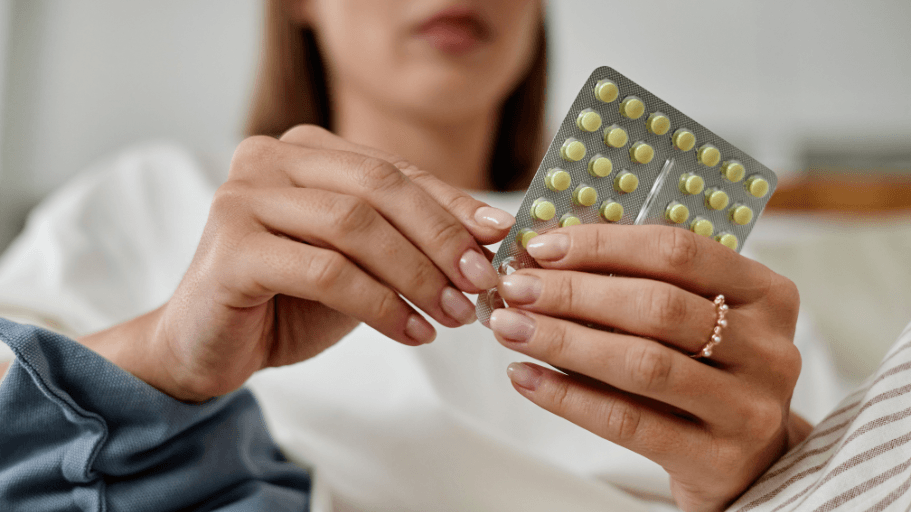
There is still much debate in the medical community over whether or not oral contraceptives cause depression or other mood disturbances.
The Link Between Birth Control and Depression
It seems that the incidents of depression after starting use of the birth control pill are present, but in a relatively small percentage of women. The symptoms of depression after taking oral contraceptives are higher in women with a history of depression and in women with a history of intense premenstrual symptoms.
Wrote Ruta Nonacs, MD, PhD, in an overview published by MGH Center for Women’s Health:
“Clinically we find that some women report depression or mood swings with oral contraceptives. In our group, we refer to this as ‘OC dysphoria.’ Women with OC dysphoria typically develop moderate to severe depressive symptoms shortly after starting oral contraceptives, and they usually stop taking it before finishing the first pack. While this is what we observe clinically, it is not a common side effect but is severe enough to lead to discontinuation.”
What This Means
The takeaway, so far, is that symptoms of depression linked to use of oral contraceptives don’t happen too often, but often enough to take notice—and when symptoms occur, continuing with the pill is intolerable to the patient. The change in mood is that distinct.
A certain percentage of women (the number varies depending on the study) report an improvement in mood after taking oral contraceptives. Here the picture becomes even more confusing. The mood improvement is ALSO more likely to occur in women with a history of depression.
Oral Contraceptives and Postpartum Health
Of course, in our practice, we are curious about the use of oral contraceptives in terms of postpartum health. Does hormonal supplementation of this kind increase the risk and severity of postpartum depression and other perinatal mood disorders?
Said Maria Wolff, Saint Paul area Certified Nurse Midwife, RN/APRN:
“The combined estrogen and progesterone hormonal methods of birth control pills, the patch, and vaginal ring are not recommended in most women for at least 30 days postpartum, and for breastfeeding women, these forms of contraception are not recommended for six months postpartum.”
Wolff went on to say:
“The data on progestins’ effect on incidents of postpartum depression is not clear. There is conflicting data, though some experts recommend avoiding Depo-Provera in the immediate postpartum period for women with a history of severe postpartum depression.”
Unfortunately, not many complete studies have been done, and when research has been seen through to a final outcome, it is with a group of women who could withstand the medication for longer than one month. Remember that women who do encounter symptoms often end up stopping use of the OC before the end of the first cycle of pills.
The Impact on Breastfeeding
Another piece to the puzzle: a small percentage of women report a decrease in milk supply when taking oral contraceptives, even when using progesterone-only methods. Estrogen combination methods show high incidents of decreased milk supply, which is why they are not recommended postpartum.
In the world of postpartum health, we see early discontinuation of or struggles with breastfeeding as a link to postpartum depression. Whether it is a cause, a symptom, or an intensifying factor, we’re not always sure.
Said Wolff:
“Anecdotally, I have had patients report mood changes including irritability and decreased libido who are using progesterone-only methods in the postpartum period. When the methods are discontinued, some of these women report relief from symptoms.”
What We Can Conclude
This is a big swirling mess of information, really, but it all points to several definite conclusions:
-
More research needs to be done.
-
There is at least some correlation between mood and the birth control pill.
-
Those with a history of depression should think carefully about taking the birth control pill, especially in the postpartum period when recurrence of depressive symptoms in the form of a perinatal mood disorder is more likely.
The Role of Hormones in Mood Regulation
Without a doubt, hormones affect our mood. They elicit (often to our benefit) feelings of sleepiness, stress, love, sexuality, and more. This is especially true for women. Talk to a woman just before her period about her worries and fears, and you will likely get a different response than just after her period. A woman tends to feel differently for her partner at different times in the menstrual cycle. A 60-year-old woman, long past her own childbearing years, will often feel a “phantom letdown” in her breasts when holding a grandchild or friend’s baby triggers an oxytocin rush.
Of menopausal women and those suffering from postpartum mood disturbances, we point out that MANY things affect hormonal imbalance and mood swings—what she eats, how she sleeps, if she drinks alcohol. It seems obvious that literally ingesting synthetic hormones would have some effect on hormonal imbalance and mood! And of course, as with any outside factor, every individual feels the effects differently.
The Bottom Line: Listen to Your Body
Listen to your body and trust your gut. If you notice a significant change in your mood that you believe is a result of taking oral contraceptives, talk to your doctor or reach out to a therapist.
For more insights on postpartum health, as well as resources and support, visit PHA Wellness.